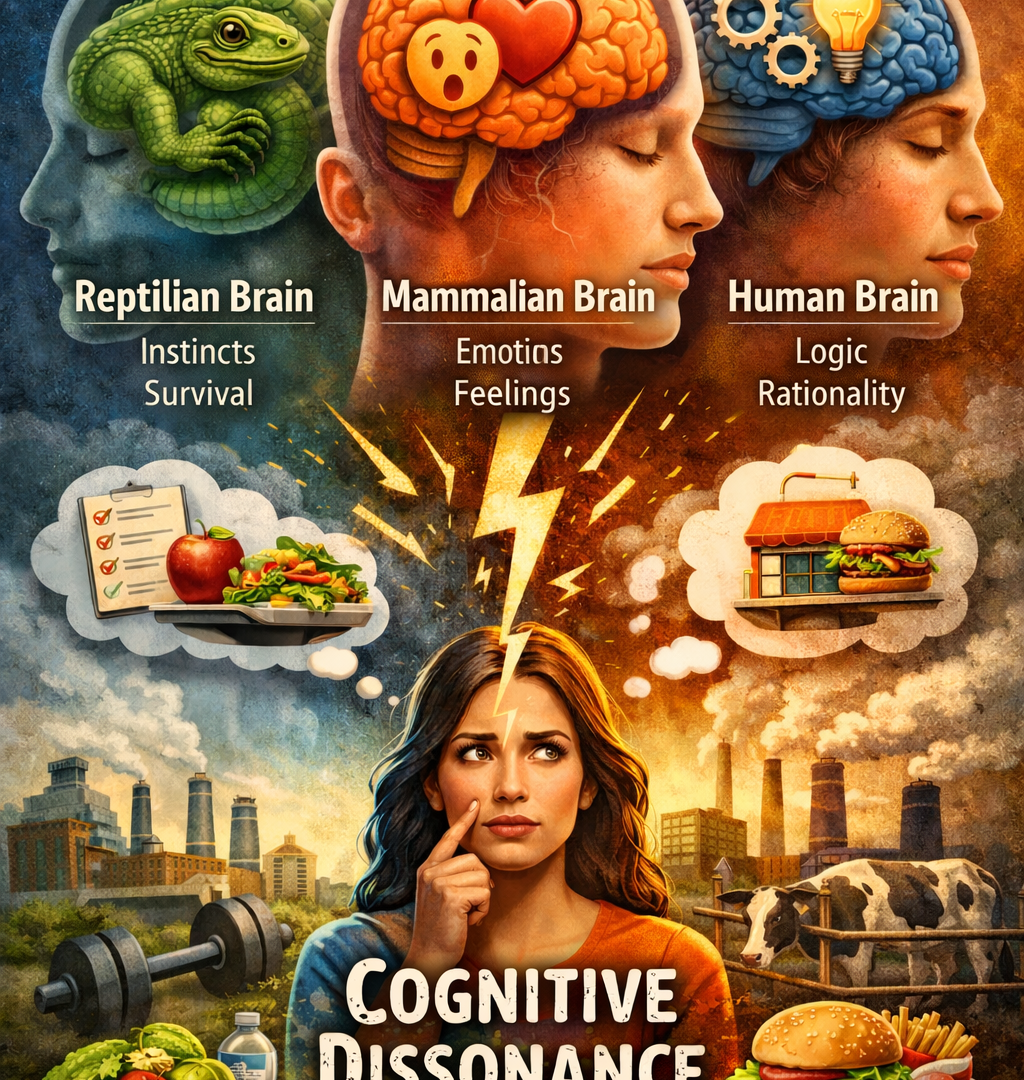
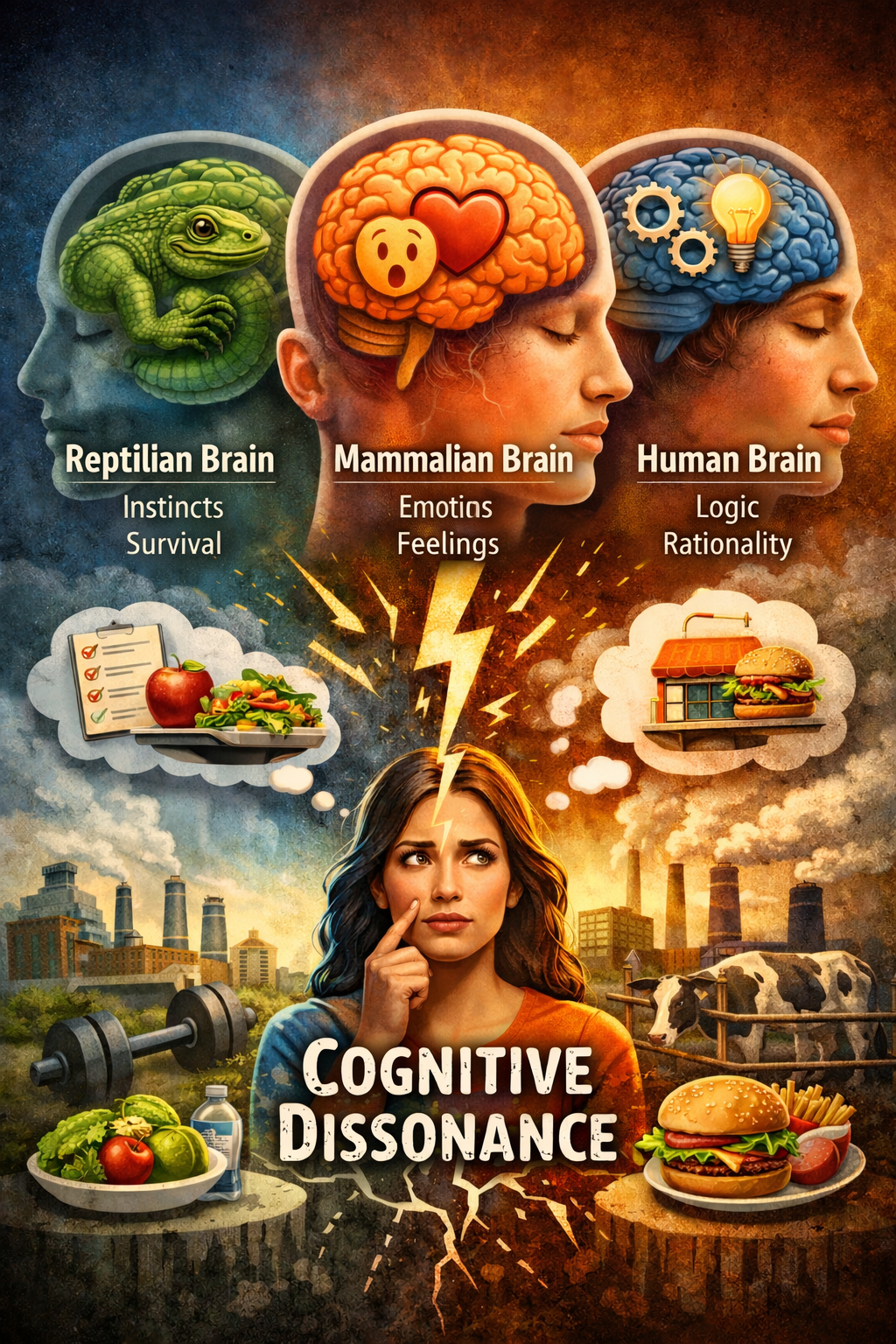
Cognitive Dissonance
In this blog, I turn my attention to cognitive dissonance, a concept from the behavioral sciences. But what does it actually mean?
Simply put, it comes down to doing one thing while thinking another. Often, that thinking even precedes the action. The explanation for this seemingly contradictory behavior lies deep within our brains. After all, our brains are responsible for both what we think and what we do. But how is it possible that these two processes are not always in sync?
To understand this, we need to go back to the basics: the structure of the human brain.
The Reptilian Brain
The oldest part of our brain is known as the reptilian brain, also referred to as the primitive brain or brainstem. This part controls our most basic survival functions, such as breathing, heart rate, and body temperature. It operates reflexively, rapidly, and is fully focused on survival.
The Mammalian Brain
Above that lies the mammalian brain, better known as the limbic system. This part of the brain is responsible for emotions, motivation, and memory. It developed around the reptilian brain and helps us assign meaning to experiences.
The Human Brain
On the outer layer of the brain we find the human brain, the cerebral cortex or neocortex. This is the most recent and highly developed part of our brain. It governs reason, logic, language, and complex thought. It enables us to analyze situations, plan ahead, and make deliberate choices.
(The so-called three brain model is a simplification, but it helps make human behavior more understandable.)
Cognitive Dissonance
Under calm conditions, these three systems work together relatively harmoniously, with the human brain maintaining oversight. But when stress, temptation, or danger arises, the reptilian brain often takes control. Emotions from the mammalian brain amplify this effect, pushing rational thinking temporarily into the background.
This internal conflict lies at the heart of cognitive dissonance.
Cognitive dissonance occurs when we are confronted with conflicting beliefs, values, or behaviors. This creates discomfort. And we instinctively want to reduce that tension as quickly as possible.
Imagine you decide to start eating healthier from January 1st. That intention originates in your rational human brain. But it quickly clashes with your desire for pleasure, habits, and immediate gratification. To reduce the tension, we may change our behavior, adjust our beliefs, or rationalize our actions (“just this once won’t hurt”).
An Illustration
Take intensive livestock farming, also known as industrial farming. Around 60 to 80 percent of Dutch citizens would prefer to see this industry disappear. Yet this attitude is hardly reflected in actual purchasing behavior. The vast majority of milk, eggs, and meat consumed in the Netherlands still comes from industrial farming.
This is a clear example of cognitive dissonance. We claim to care deeply about animal welfare—just look at how we treat our pets—yet we continue to buy products that directly contradict those values.
If the entire world were to match Dutch levels of animal product consumption, we would need three to four Earths. Moreover, intensive livestock farming causes serious problems: nitrogen and ammonia pollution, health issues for nearby residents, structural animal suffering, risks to public health, and major damage to climate and biodiversity.
Reason Versus Desire
Despite all this knowledge, we still often give in to hamburgers, barbecues, or festive meat-based meals. The reptilian and mammalian brains form a powerful alliance that the rational brain frequently struggles to overcome. It’s no coincidence that the saying goes: the flesh is weak.
The same mechanism applies to sweets and junk food. We know how unhealthy they are, but under stress—when are we not stressed?—the reptilian brain takes over, and immediate gratification outweighs abstract concepts like long-term health.
Cognitive dissonance is constantly lurking in everyday life—and industries such as Big Food, Big Pharma, Big Booze, and Tobacco are all too happy to exploit it.
Consider yourself warned.